By Devin Morrissey
Sometimes homeless dog owners are forced to make the painful decision whether to keep their pet or give them up. That’s a tough position to be in. They care about their animal’s well-being and want what’s best for them.
Imagine life without your best friend and closest companion. For many of us, that friend or companion is our dog. For someone without a home, the only grounding factors in life are often a pet’s companionship and love.
“For many homeless people who have been thrown away or abandoned by families and communities, a relationship to a dog is the most important and secure relationship they have in their life,” writes certified trick dog trainer Sassafras Lowrey. “It is unfortunately often those same vital relationships that keep people on the street instead of in homeless shelters, as most shelters do not permit people to bring animals with them.”
Homelessness affects 3.5 million Americans; 5-10 percent of that population owns a dog and/or cat. Those are some big numbers, but the good news is there are plenty of resources available designed to keep owners with their companions.
Let’s Stay Together: Help With Vet Care, Food Costs, Education & Training
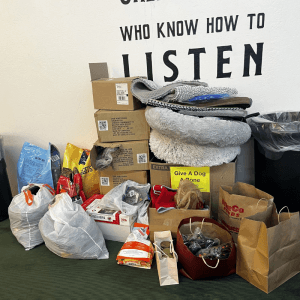
Pets Of The Homeless is one such nonprofit organization that provides pet food and veterinary care for the pets of the homeless across the country and in Canada. It’s the only such organization focused solely on feeding and emergency vet care. You can make a donation or find a food donation site near you. You can also read the many wonderful “success stories” about the vet care that Pets Of The Homeless has been able to provide deserving owners and pets.
While homeless pet owners are taking care of their dogs, we can’t forget the relationship is reciprocal. It’s long been established that owning a dog is good for your health — it improves your physical and mental well-being.
Medical News Today cites a study that supports the idea that owning a dog can help prevent people from getting sick, recover quicker from illness, and detect early signs of cancer, seizures and hypoglycemia. Dog owners have also been known to have lower blood pressure and cholesterol. One analysis even shows that single-person households with dogs may reduce the risk of premature death compared to dog-less people.
That’s not to mention the therapeutic role that dogs play in aiding disabled people as well as people in hospitals and prisons. There’s also the plain fact that the dog/human bond is a “psychological buffer against stress.”
The Bark Avenue Foundation assists the homeless and veterans in the Los Angeles area stay safely with their pets in order to “empower pet owners and local communities to reduce abandoned animal populations through spay and neuter, pet retention and reclamation, and education.”
According to their website, there were 57,794 homeless people in L.A. in 2017. On any given night, there are 42,828 people in L.A. County who go without shelter, up 23 percent from 2016. Across the U.S., 8.6 percent of the homeless are veterans; over 50 percent of those veterans are suffering from a mental illness or physical disability.
Realizing that there’s limited shelter space for the homeless and many shelters don’t allow pets, the Bark Avenue Foundation started a program called Unsheltered People & Pets (UPP), to ensure they stay together during tough times. The UPP program offers pet care education, dog/cat food, pet supplies like collars, leashes, beds and ID tags, free spay and neuter operations, and vaccinations. UPP also works with social services and housing providers to create housing and opportunities where the homeless will not be separated from their animals.
As you can see, the pet care education for owners is an important component. It’s one of the mission’s of Homeless With Pets — to make sure people are more aware of some of the risks associated with living homeless with pets. Dogs need vaccinations; they need to be neutered or spayed; they need to be well behaved; they need to be safe around other people in public, etc. This goes for all dog owners. We all bear the responsibility that goes along with owning a dog.
Even when we treat our dogs like humans, we can’t forget they are still dogs. They act out and can even bite as a form of defense or protection. Would you know what to do if your dog bit somebody? It might be a pretty expensive mistake to fix.
There are plenty of compassionate organizations and nonprofits throughout the country dedicated to helping people and pets in crisis. A lot of folks are facing homelessness because of illness, domestic violence, job loss, and foreclosure, among many other things. Everyone has a story to tell. For those who don’t know where to turn, there is hope.